

A denied hail claim can feel like a punch to the gut. You pay insurance premiums for years. A hailstorm rolls through Waco. Your roof, gutters, siding, or windows suffer damage. Then the insurance company sends a letter saying your claim is denied.
Now what? The good news is this: a denied hail claim does not necessarily mean the end of the road. In fact, many homeowners who receive a denial later succeed in recovering compensation after gathering additional evidence, obtaining independent inspections, and challenging the insurer’s findings. If you’re searching for What to Do If Your Hail Claim Was Denied in Waco, TX, you’re already taking the right first step. The key is understanding why the claim was denied and what actions can improve your chances of overturning that decision. Let’s walk through the process.
Understanding Why Hail Claims Get Denied
Insurance companies deny hail claims for various reasons. Some are legitimate. Others are disputed regularly. Before responding, it’s important to understand exactly why the insurer rejected your claim.
Common Reasons Hail Claims Are Denied
Here are some of the most frequent explanations homeowners receive:
| Reason for Denial | Explanation |
|---|---|
| Wear and tear | Damage is attributed to aging materials rather than hail |
| Pre-existing damage | Insurer claims damage existed before the storm |
| Insufficient evidence | Not enough proof of storm-related impacts |
| Late reporting | Claim submitted long after the storm occurred |
| Policy exclusions | Specific damage not covered under the policy |
| Maintenance issues | Poor upkeep allegedly contributed to damage |
Sometimes these conclusions are accurate. Other times, they are not. That’s why independent verification is often critical.
Denied vs. Underpaid Claims
Many homeowners believe a claim is either approved or denied. The reality is more complicated. Some insurers deny portions of a claim while approving others. For example, they may approve gutter repairs but deny roof replacement.
This creates a partial denial situation. Whether your claim was fully denied or significantly underpaid, the same principle applies: investigate the decision before accepting it.
First Steps After Receiving a Denial Letter
Emotions often run high after receiving a denial. That’s understandable. But this is not the time for panic. It’s time for organization.
Read the Denial Letter Carefully
Start by reviewing every page.
Look for:
- Specific reasons for denial
- Policy sections being referenced
- Inspection findings
- Dates mentioned
- Appeal rights
- Response deadlines
Many homeowners skip this step and immediately call the insurer. Read first. Call later. Understanding the insurer’s position allows you to prepare a more effective response.
Request a Complete Copy of Your Policy
You cannot challenge a denial without understanding the contract.
Ask for:
- Full policy language
- Endorsements
- Exclusions
- Coverage declarations
Many disputes come down to policy interpretation. The exact wording matters.
Create a Claim File
Create a dedicated folder for all claim-related materials.
Include:
- Denial letters
- Emails
- Inspection reports
- Estimates
- Photographs
- Repair invoices
- Weather reports
- Communication logs
Organization becomes a powerful advantage during claim disputes.
Gather Strong Evidence of Hail Damage
Evidence wins arguments. Opinions rarely do.
One of the most effective ways to challenge a denial is by building a stronger evidence package than the insurer originally reviewed.
Schedule an Independent Roof Inspection
Never assume the insurance company’s inspection was exhaustive.
Adjusters often inspect numerous properties following major storms.
Time constraints exist.
Human error exists.
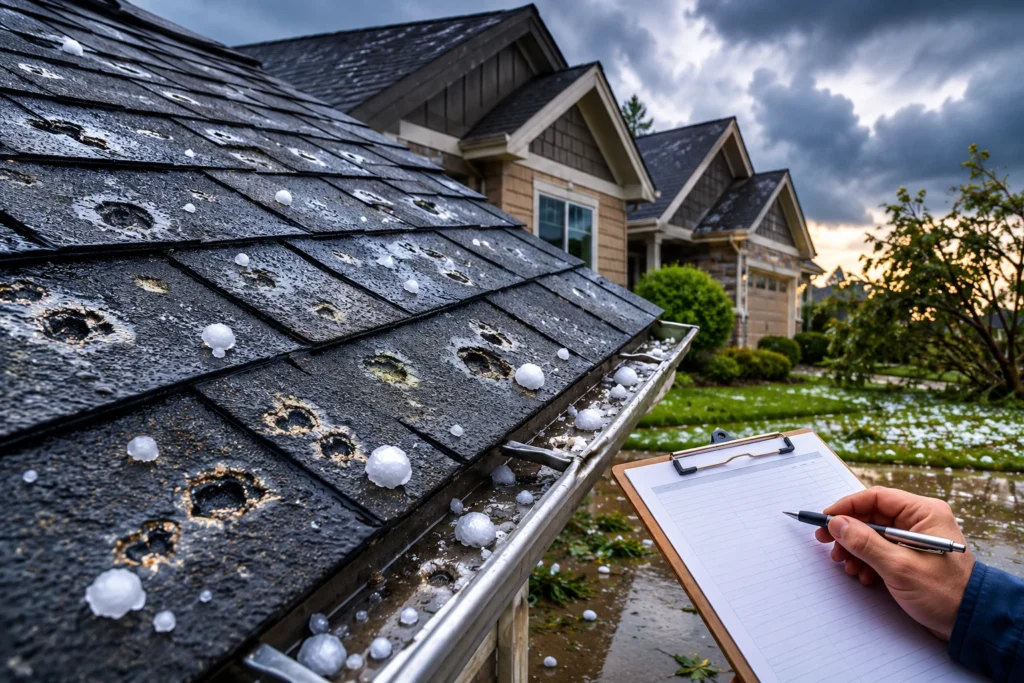
Independent roofing professionals may identify:
- Impact bruising
- Granule loss
- Damaged flashing
- Compromised vents
- Cracked shingles
- Soft spots
A second opinion frequently reveals issues overlooked during the original inspection.
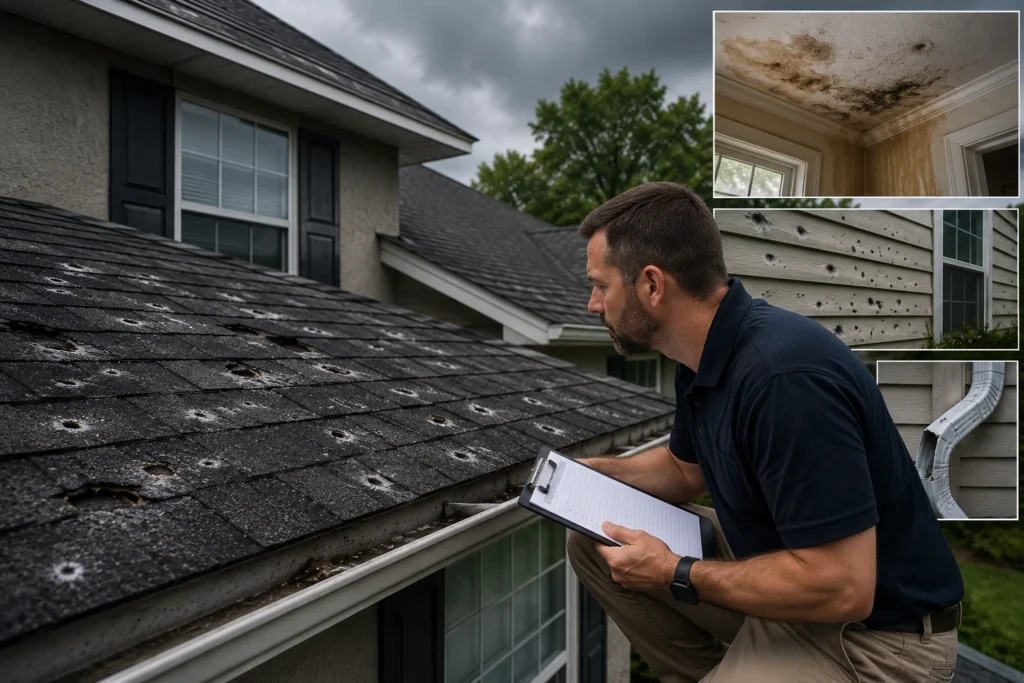
Document Every Area of Damage
Don’t focus solely on the roof.
Hail can affect multiple parts of a property.
Inspect:
- Roofing materials
- Gutters
- Downspouts
- Siding
- Window screens
- Air conditioning units
- Fencing
- Outdoor structures
The broader the damage pattern, the stronger the evidence supporting storm causation.
Take Detailed Photos and Videos
Photographs tell stories.
Take images from multiple angles.
Capture:
- Close-up impacts
- Wide-angle views
- Damaged components
- Interior water stains
- Broken materials
Use timestamps whenever possible.
Video walkthroughs can also provide valuable context.
Use Weather Data to Support Your Claim
Weather records can strengthen your position significantly.
Reliable storm reports help establish:
- Date of loss
- Storm intensity
- Hail size
- Geographic impact zone
When combined with physical damage evidence, weather documentation can become persuasive support during an appeal.
Understanding the Insurance Company’s Findings
Before you challenge a denial, understand exactly how it was reached.
Request the Inspection Report
Many homeowners never ask for the inspection documents used by the insurer. That’s a mistake.
The report may reveal:
- Missing observations
- Incorrect assumptions
- Limited inspection areas
- Contradictory findings
Reviewing the report often uncovers opportunities to challenge the denial.
Common Misclassification Problems
Hail damage is not always obvious.
Insurance representatives sometimes classify storm damage as:
- Aging
- Thermal cracking
- Foot traffic
- Manufacturing defects
- Installation issues
Those conclusions may or may not be correct. Independent inspections help determine whether hail was actually responsible.
Interestingly, this process resembles the scientific principle of classification found in fields like Taxonomy, where accurate identification depends heavily on careful observation and evidence. Small distinctions can lead to dramatically different conclusions. In insurance claims, those distinctions often determine whether thousands of dollars are paid or denied.
How to Appeal a Denied Hail Claim
Once you’ve gathered supporting documentation, it’s time to begin the appeal process.
Step 1: Submit a Written Reconsideration Request
Keep it professional. Avoid emotional language.
Include:
- Claim number
- Property address
- Date of loss
- Reason for disagreement
- Supporting evidence
Your goal is to present facts. Facts carry more weight than frustration.
Step 2: Include Additional Documentation
Strong appeal packages often contain:
- Independent roof inspections
- Contractor reports
- Engineering evaluations
- Weather records
- Photographs
- Repair estimates
The insurer should be able to clearly see why the original decision may have been incomplete.
Step 3: Request a Reinspection
A second inspection can dramatically change outcomes.
Especially when:
- New evidence exists
- Additional damage has been identified
- The first inspection was limited
Many successful claim reversals begin with a reinspection request.
Step 4: Keep a Communication Log
Document everything.
Track:
| Information | Example |
|---|---|
| Date | June 15 |
| Representative | John Smith |
| Method | Phone Call |
| Summary | Requested reinspection |
| Follow-up Date | June 22 |
These records can become extremely valuable if disputes continue.
How to Document Hail Damage for an Insurance Claim
One reason homeowners struggle during appeals is inadequate documentation. The insurance company may simply say there is insufficient evidence connecting the damage to the storm. Good documentation helps eliminate that argument.
A comprehensive documentation package should include:
- Date-stamped photographs
- Video walkthroughs
- Independent inspection reports
- Weather event records
- Maintenance history
- Repair estimates
- Communication logs
Think of your documentation as building a timeline. Every piece of evidence should help answer one question: “Did this hailstorm cause this damage?” The more clearly you answer that question, the stronger your position becomes.
When a Public Adjuster Can Help
Many homeowners attempt the appeal process themselves. Some succeed. Others quickly discover how complex insurance disputes can become. That’s where public adjusters enter the picture.
What a Public Adjuster Does
Unlike company adjusters, public adjusters work for policyholders.
Their responsibilities often include:
- Damage assessment
- Policy review
- Documentation preparation
- Claim valuation
- Negotiation support
- Reinspection coordination
Their objective is simple. Present the strongest possible case supported by evidence.
Signs You May Need Professional Assistance
Consider professional representation if:
- The claim involves significant damage
- Multiple structures are affected
- The insurer insists damage is old
- Reinspection requests are ignored
- Settlement offers seem inadequate
- Technical disputes arise
These situations often require a higher level of claim analysis.
Why Denied Hail Claims Are Especially Challenging in Texas
Texas experiences some of the most severe hail activity in the country. That means insurance companies process enormous numbers of storm-related claims every year.
High claim volume can lead to:
- Increased scrutiny
- More inspections
- Greater disagreement over causation
- More frequent claim disputes
For homeowners in Waco, understanding this environment is important. Claim denials are not uncommon. However, successful appeals are not uncommon either. The difference often comes down to preparation, documentation, and persistence.
How Public Adjusters Strengthen Denied Hail Claims
When homeowners hear the words “claim denied,” many assume there is little they can do. That assumption can be costly. A denial is often based on the information available to the insurer at a specific point in time. If additional evidence emerges or weaknesses are found in the original inspection, the outcome can change. This is one reason many property owners seek help after a denial.
Comprehensive Damage Assessments
A public adjuster typically conducts a detailed review of the property.
This may include:
- Roof inspections
- Exterior damage assessments
- Interior evaluations
- Review of previous repair records
- Analysis of insurer documentation
The goal is to identify all storm-related damage, not just the items noted during the original inspection.
Policy Analysis
Insurance policies contain hundreds of provisions, exclusions, definitions, and endorsements. Small details matter.
A public adjuster reviews the policy to determine:
- What coverage applies
- Whether exclusions were interpreted correctly
- Potential areas of dispute
- Additional benefits that may have been overlooked
Many homeowners simply do not have the time or experience to perform this level of analysis themselves.
Negotiation Support
Insurance claims are ultimately evidence-driven negotiations. The stronger the evidence, the stronger the position. Public adjusters help present documentation in a format insurers can evaluate efficiently, reducing confusion and focusing attention on the facts.
Can an Engineer Help Overturn a Denied Hail Claim?
In some situations, engineering analysis becomes valuable. Particularly when there is a disagreement about what caused the damage.
What Forensic Engineers Do
Forensic engineers investigate physical damage and determine likely causes.
In hail disputes, they may evaluate:
- Impact patterns
- Material failures
- Structural conditions
- Roofing components
- Weather-related deterioration
Their findings can provide an independent perspective.
When Engineering Reports Make Sense
Engineering evaluations may be useful when:
- The claim involves substantial financial exposure
- The insurer claims damage resulted from aging
- Multiple experts disagree
- Structural concerns exist
An engineering report is not necessary for every claim. However, in complex disputes, it can become a powerful piece of evidence.
Why Independent Opinions Matter
Insurance companies often rely on their own experts. Homeowners are not required to rely solely on those conclusions. Independent evaluations can provide a broader picture of the property condition and damage history.
Alternative Dispute Options After a Denial
Sometimes appeals do not resolve the disagreement. Fortunately, additional options may still exist.
Insurance Appraisal
Many Texas insurance policies contain appraisal provisions. Appraisal is commonly used when the parties disagree on the value of a loss.
The process generally involves:
- Each side selecting an appraiser
- Appraisers evaluating the dispute
- An umpire being selected if disagreements remain
Appraisal is not appropriate for every denial, but it can be effective in certain situations.
Mediation
Mediation involves a neutral third party who helps facilitate discussion between both sides.
Benefits include:
- Faster resolution
- Reduced expenses
- Opportunity for compromise
- Less adversarial environment
Many disputes settle during mediation because both parties gain a clearer understanding of the strengths and weaknesses of their positions.
Filing a Complaint With the Texas Department of Insurance
Homeowners who believe their claim was handled improperly may consider contacting the Texas Department of Insurance. While regulators do not determine claim values, they can review concerns regarding claim handling practices and compliance issues.
Before filing a complaint, gather:
- Policy documents
- Claim correspondence
- Inspection reports
- Denial letters
- Communication logs
Complete documentation helps support the review process. Most homeowners prefer avoiding lawsuits. For good reason.
Litigation as a Last Resort
Litigation can be expensive and time-consuming. However, there are circumstances where legal action may become appropriate, particularly if significant disputes remain unresolved after other avenues have been exhausted. If litigation becomes a possibility, detailed documentation becomes even more important.
Common Mistakes Homeowners Make After a Denial
A denial creates pressure. Pressure often leads to mistakes. Avoiding these errors can significantly improve your chances of success.
Waiting Too Long
Time matters. Insurance policies frequently contain deadlines. Evidence can disappear. Damage can worsen. Witness memories fade. The sooner you begin investigating the denial, the better.
Accepting the First Answer
Many homeowners assume the insurance company’s decision is final. It often isn’t. Denials are challenged successfully every year. The key is understanding why the denial occurred and whether evidence supports a different conclusion.
Failing to Seek Independent Opinions
The insurance company performed an inspection. That doesn’t mean it was the only valid inspection. Independent assessments frequently identify damage missed during initial evaluations.
Throwing Away Documentation
Never discard:
- Inspection reports
- Emails
- Estimates
- Photographs
- Repair invoices
- Denial letters
What seems unimportant today may become critical later.
Performing Major Repairs Too Soon
Emergency mitigation may be necessary. However, extensive repairs before proper documentation can create challenges. Always document conditions thoroughly before major work begins whenever possible.
Real-World Example: A Denied Hail Claim Reopened
Consider a common scenario. A Waco homeowner experiences a severe hailstorm. Several neighboring homes receive roof replacements. The homeowner files a claim.
Initial Inspection
The insurer inspects the property. A few weeks later, a denial letter arrives. The reason? The company concludes the roof’s condition resulted primarily from aging and normal wear. Case closed? Not necessarily.
Independent Review
The homeowner obtains an independent roofing inspection.
The inspection identifies:
- Multiple hail impact points
- Damaged flashing
- Granule displacement
- Functional roof damage
The contractor also provides detailed photographs and measurements.
Additional Evidence
The homeowner gathers:
- Local weather reports
- Storm verification records
- Historical property photos
- Maintenance documentation
The evidence package becomes substantially stronger than the one initially reviewed.
Reinspection and Resolution
A reinspection is requested. Additional damage is identified. Negotiations follow. The insurer ultimately reopens the claim and approves a substantially larger settlement. This scenario is not unusual. Many successful claim reversals occur because additional evidence changes the discussion.
How to Protect Future Hail Claims
The best claim dispute is often the one that never happens. Preparation matters.
Schedule Routine Roof Inspections
Annual inspections help establish baseline conditions. This makes it easier to distinguish storm damage from pre-existing issues.
Document Property Conditions
Take photographs periodically.
Capture:
- Roof surfaces
- Gutters
- Siding
- Windows
- Exterior equipment
Current documentation becomes valuable if future damage occurs.
Save Maintenance Records
Keep copies of:
- Roof repairs
- Contractor invoices
- Inspection reports
- Maintenance receipts
These records can help demonstrate that damage was not the result of neglect.
Report Damage Promptly
Waiting months or years to file a claim can create unnecessary complications. Prompt reporting generally makes investigations easier.
Maintain Organized Records
A well-organized property file can save enormous time during a claim. Store records digitally and maintain backups whenever possible.
Why Local Expertise Matters in Waco Hail Claims
Every region experiences unique weather patterns. Waco is no exception.
Central Texas regularly faces:
- Severe thunderstorms
- Large hail events
- High winds
- Rapid weather changes
These conditions create claim challenges that local professionals understand well.
Knowledge of Regional Storm Activity
Professionals familiar with Waco properties often understand:
- Local storm histories
- Typical hail patterns
- Common roofing systems
- Regional construction practices
This knowledge can help identify damage that may otherwise be overlooked.
Familiarity With Local Property Types
Different roofing materials respond differently to hail. A professional experienced with local construction methods can often evaluate damage more accurately.
Understanding Insurance Trends
Claim handling practices evolve over time. Professionals who regularly work with hail claims often recognize patterns that may impact claim outcomes.
Frequently Asked Questions
How long do I have to appeal a denied hail claim in Texas?
Deadlines vary by policy, so review your insurance documents immediately and act as quickly as possible.
Can a denied hail claim be reopened?
Yes. Many denied claims are reconsidered when additional evidence or inspections reveal information not previously reviewed.
What if the insurance company says the damage is old?
Independent inspections, maintenance records, and weather data may help establish whether the damage is actually storm-related.
Should I hire a public adjuster after a denial?
It may be beneficial if the claim involves significant damage, technical disputes, or complex policy issues.
Can weather reports help my appeal?
Absolutely. Weather records can support the existence, timing, and severity of a hail event.
What evidence is most helpful during an appeal?
Photographs, inspection reports, engineering evaluations, weather records, and maintenance documentation are often valuable.
What if my roof starts leaking after the denial?
Document the leak immediately, take photographs, and seek professional evaluation to determine whether storm damage contributed to the problem.
Is appraisal available for every denied claim?
Not always. Appraisal provisions vary by policy and may not apply to every dispute.
Can I challenge an insurance inspection?
Yes. Homeowners routinely obtain independent inspections when they disagree with an insurer’s findings.
How soon should I respond to a denial letter?
As soon as possible. Delays can affect deadlines, evidence preservation, and overall claim strategy.
Conclusion
Receiving a denial can be frustrating. It can also feel overwhelming. But homeowners searching for What to Do If Your Hail Claim Was Denied in Waco, TX should remember one important fact: a denial is often the beginning of a dispute, not necessarily the end of a claim. The most successful challenges usually share several characteristics. They involve strong documentation, independent inspections, organized evidence, and prompt action.
Start by understanding why the claim was denied. Gather supporting evidence. Request additional reviews when appropriate. Seek professional guidance if the dispute becomes complex. Most importantly, don’t assume the first answer is the final answer. With persistence, preparation, and the right evidence, many denied hail claims can be revisited, reevaluated, and ultimately resolved more favorably.
FAQs
Yes. Many forms of hail damage are only visible during a professional roof inspection and may not be noticeable from ground level.
Review the denial letter carefully, gather all claim documents, and consider obtaining an independent inspection.
You may be able to request reconsideration or reopen the claim if new evidence becomes available.
Photos are extremely valuable because they provide visual evidence that can support your position during a dispute.
A qualified contractor can provide documentation, damage assessments, and repair estimates that may support an appeal.
No. Older roofs can still qualify for coverage if hail damage caused a covered loss under the policy.
Yes. Hail can damage gutters, siding, windows, HVAC units, fencing, and other exterior property components.
You may consider seeking assistance from a public adjuster, appraiser, engineer, or other dispute-resolution options.
Yes. Storm data can help confirm the timing, location, and severity of hail events affecting your property.
Many denied claims are successfully reconsidered when homeowners provide stronger evidence and supporting documentation.