

When a severe hailstorm passes through your neighborhood, the obvious concern is property damage. The less obvious concern is documentation. And yet, documentation is often the single factor that determines whether an insurance claim proceeds smoothly or turns into a frustrating dispute. That’s why understanding How to Document Hail Damage for an Insurance Claim is so important. Insurance companies rely on evidence. The more organized and thorough your evidence is, the stronger your position becomes during the claims process.
Many homeowners make the mistake of assuming the insurance adjuster will identify every damaged area. Unfortunately, that doesn’t always happen. Damage can be subtle. Some impacts are easy to miss. Others may not become visible until weeks or months later. Whether you’re preparing for a potential claim or already dealing with storm damage, this guide will walk you through every step of documenting hail damage effectively. For homeowners in Waco, where hailstorms can occur during severe weather seasons, understanding proper claim documentation can save considerable time, money, and stress.
Why Documentation Matters More Than Most Homeowners Realize
Insurance claims are evidence-driven. Insurance carriers evaluate claims based on facts, observations, photographs, inspection findings, and supporting documentation. If damage isn’t documented, proving it later becomes significantly more difficult. Think of documentation as building a case. Every photograph, inspection report, receipt, and written note adds another piece of supporting evidence.
Good documentation helps:
- Verify storm-related damage
- Establish timelines
- Support repair costs
- Reduce claim disputes
- Strengthen supplemental requests
- Improve communication with insurers
Poor documentation often creates uncertainty. And uncertainty rarely helps policyholders.
What Happens When Documentation Is Weak?
Several problems commonly arise:
| Documentation Issue | Potential Consequence |
|---|---|
| Limited photographs | Damage may be overlooked |
| Missing storm dates | Causation disputes |
| No inspection reports | Reduced credibility |
| Missing receipts | Reimbursement challenges |
| Incomplete notes | Delayed claim review |
The goal isn’t simply filing a claim. The goal is creating a clear, evidence-based picture of what happened.
Step 1: Prioritize Safety Before Looking for Damage
The first rule is simple. Do not rush onto the roof. Many injuries occur after storms because homeowners attempt inspections under unsafe conditions. Instead, begin with a visual inspection from the ground.
Wait Until Conditions Stabilize
Before inspecting anything:
- Avoid standing water
- Watch for downed power lines
- Stay clear of unstable structures
- Allow severe weather to fully pass
Safety always comes first. A claim can wait a few hours. A serious injury cannot.
Start with Ground-Level Observations
Many signs of hail damage are visible without climbing.
Look for:
- Damaged gutters
- Dented downspouts
- Broken windows
- Damaged screens
- Dented garage doors
- Impact marks on siding
These visible indicators often suggest additional roof damage may exist.
Why Roof Inspections Require Caution
Roof damage is not always obvious. A shingle may appear intact while underlying structural damage exists beneath the surface. Professional inspectors use specialized techniques to identify impact bruising, granule displacement, and hidden deterioration. If you suspect roof damage, documenting visible evidence from the ground is helpful. Detailed roof assessments should generally be performed by qualified professionals.
Step 2: Record Storm Information Immediately
One of the easiest pieces of evidence to collect is also one of the most important. The storm timeline.
Record the Date and Time
As soon as possible, document:
- Date of the hailstorm
- Approximate time
- Storm duration
- Estimated hail size
This information becomes important later when insurers attempt to verify storm activity.
Gather Weather Verification
Independent weather records can strengthen a claim.
Helpful sources include:
- National Weather Service reports
- Local meteorological records
- Weather radar archives
- News reports
In some cases, adjusters use weather databases to confirm storm conditions. Providing supporting information early can streamline the review process.
Save Local News Coverage
Major hail events often receive local media attention.
Save:
- Online articles
- Broadcast screenshots
- Weather alerts
- Emergency notifications
These records help establish the severity of the event.
Step 3: Photograph Everything
And then photograph even more. Many homeowners underestimate the value of visual evidence. Insurance adjusters cannot revisit the exact moment damage occurred. Your photographs help preserve that moment.
Best Practices for Claim Photography
Use a smartphone or camera capable of producing high-resolution images.
Take:
- Wide-angle photographs
- Mid-range photographs
- Close-up photographs
Capture multiple angles whenever possible.
Avoid blurry images.
Include landmarks or reference points whenever practical.
Roof Damage Photographs
If roof damage is visible from the ground, photograph:
- Missing shingles
- Granule accumulation
- Impact marks
- Damaged flashing
- Detached materials
If a professional performs a roof inspection, request copies of all inspection photographs.
Exterior Damage Documentation
Do not focus solely on the roof. Hail often damages multiple components simultaneously.
Photograph:
- Siding
- Gutters
- Downspouts
- Garage doors
- Mailboxes
- Decks
- Fences
- Exterior lighting
The more complete the documentation, the stronger the overall claim.
Window and Skylight Damage
Glass damage is especially important to document immediately.
Take photographs showing:
- Cracks
- Chips
- Fractures
- Broken seals
Use close-up images and wider shots showing the window’s location on the property.
Vehicle Damage
Many homeowners overlook vehicle damage when documenting property losses.
Capture:
- Dents
- Hood impacts
- Roof impacts
- Broken mirrors
- Windshield damage
This evidence may support separate portions of the insurance claim process.
Outdoor Equipment and Structures
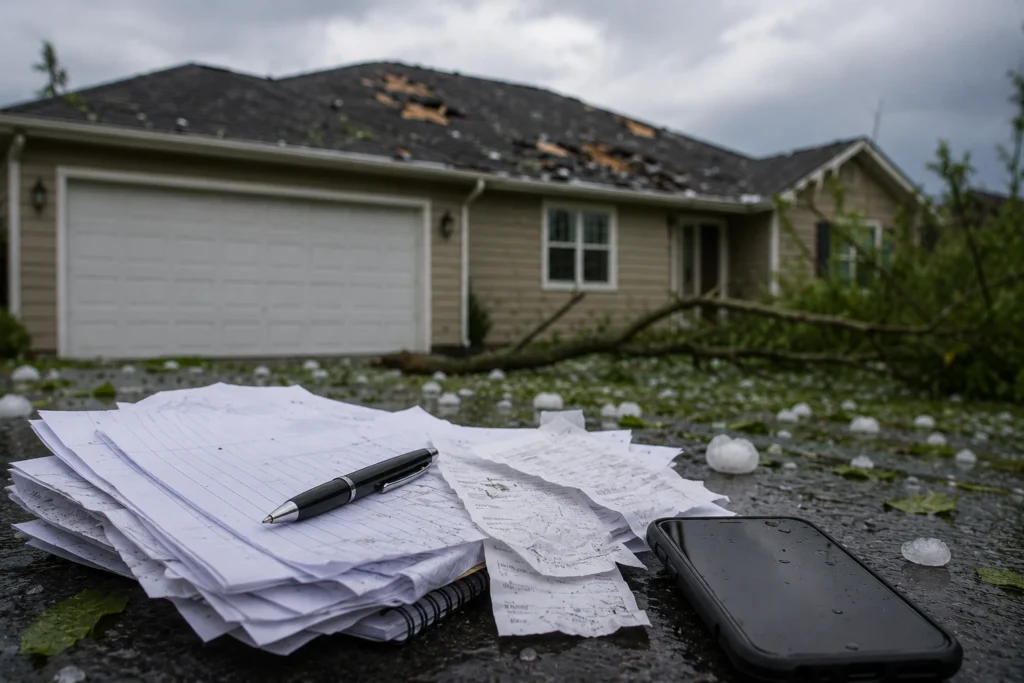
Inspect additional assets such as:
- Air conditioning units
- Storage sheds
- Pergolas
- Gazebos
- Outdoor furniture
These items often display clear hail impacts that help verify storm intensity.
Step 4: Create Detailed Written Notes
Photos tell part of the story. Written notes tell the rest.
Why Notes Matter
Several weeks may pass before the claim reaches final resolution. Memories fade. Written observations preserve important details while they’re still fresh.
What to Record
For each damaged area, document:
- Location
- Type of damage
- Approximate size
- Estimated severity
- Date discovered
Keep descriptions factual. Avoid guessing. Simply record what you observe.
Example Damage Log
| Area | Observation |
|---|---|
| North roof slope | Multiple visible impact marks |
| Garage door | Several dents near center panel |
| West gutter | Dented along entire section |
| Patio cover | Surface impacts visible |
Simple notes often become valuable later.
Build a Timeline
Create a running timeline that includes:
- Storm occurrence
- Initial inspection
- Professional inspections
- Insurance contacts
- Repair estimates
This timeline helps organize the entire claim process.
Step 5: Document Interior Damage
Many homeowners focus exclusively on exterior damage. That can be a costly mistake. Interior damage often becomes some of the strongest evidence supporting a claim.
Look for Signs of Water Intrusion
After a hailstorm, inspect:
- Ceilings
- Walls
- Attics
- Closets
- Around skylights
Common indicators include:
- Water stains
- Bubbling paint
- Soft drywall
- Damp insulation
- Discoloration
Document every finding.
Attic Inspections
The attic often reveals damage before other areas.
Look for:
- Wet insulation
- Visible moisture
- Mold growth
- Daylight entering through the roof system
Photograph everything carefully.
Why Interior Evidence Is Powerful
Roof damage can sometimes be debated. Interior water intrusion is much harder to ignore. When exterior damage is linked directly to interior consequences, the claim often becomes easier to evaluate and support. This is especially important during a Hail Damage Roof Insurance Claim, where functional damage may not always be immediately visible from the exterior alone.
Step 6: Preserve Physical Evidence
Sometimes the best evidence is the damage itself.
Save Damaged Materials
If components are removed during emergency repairs, keep them whenever possible.
Examples include:
- Damaged shingles
- Broken screens
- Cracked skylight components
- Metal fragments
Store them safely. Insurers occasionally request physical inspection of damaged materials.
Photograph Hailstones
If conditions allow, photograph hailstones shortly after the storm.
Use common objects for scale:
- Coins
- Measuring tape
- Golf balls
- Rulers
This creates visual proof of hail size.
Don’t Throw Away Evidence Too Soon
Many homeowners begin cleanup immediately. That’s understandable. However, disposing of damaged materials before documentation is complete can create unnecessary challenges later. Preserve evidence until the claim process is well underway.
Step 7: Obtain Professional Inspection Reports
Professional documentation adds credibility. It also helps identify damage homeowners may overlook.
Why Professional Inspections Matter
Experienced inspectors understand what hail damage looks like. More importantly, they know where to find it.
Professional evaluations often uncover:
- Hidden roof damage
- Flashing damage
- Vent damage
- Structural concerns
- Secondary impacts
What a Quality Inspection Report Should Include
A comprehensive report typically contains:
- Detailed photographs
- Damage descriptions
- Roof diagrams
- Measurements
- Repair recommendations
The more detailed the report, the more useful it becomes during claim review.
Compare Findings Carefully
Review inspection findings against your own observations.
Look for:
- Missing areas
- Additional damage
- Differences in scope
Consistency strengthens documentation.
Step 8: Keep Every Receipt
Claims frequently involve out-of-pocket expenses. Document all of them.
Save Emergency Repair Records
Examples include:
- Roof tarping
- Temporary repairs
- Water mitigation
- Debris removal
Retain invoices and receipts.
Track Additional Living Expenses
If severe damage forces temporary relocation, maintain records for:
- Hotel stays
- Meals
- Transportation
- Temporary housing costs
Policies vary, but documentation remains essential.
Create a Claim Expense Folder
Store all records in one location. Both digital and physical copies are recommended. Organization reduces stress and prevents important documents from being misplaced. For larger claims, this simple step can make a remarkable difference.
Step 9: Maintain a Complete Communication Log
One of the most overlooked aspects of claim documentation has nothing to do with photographs. It’s communication. Every phone call, email, text message, and meeting related to the claim should be recorded.
Why?
Because misunderstandings happen. People change roles. Adjusters are reassigned. Details get forgotten. A communication log helps ensure important information doesn’t disappear during the process.
What to Track
For every interaction, record:
- Date
- Time
- Name of the person involved
- Company name
- Phone number or email
- Summary of discussion
For example:
| Date | Contact | Discussion |
|---|---|---|
| April 10 | Insurance adjuster | Scheduled inspection |
| April 12 | Roofing contractor | Initial inspection completed |
| April 18 | Insurance carrier | Requested additional photos |
Simple records can become valuable if disputes arise later.
Save All Emails
Create a dedicated folder for claim correspondence.
Store:
- Inspection confirmations
- Coverage explanations
- Estimate revisions
- Claim updates
- Supplemental requests
Written communication often provides clarity when verbal conversations become difficult to recall.
Step 10: Organize a Complete Claim Documentation Package
At this stage, you’ve gathered a significant amount of information. Now it’s time to organize it. The goal is creating a claim file that tells a complete story from beginning to end.
Essential Claim Documents
A complete claim package often includes:
| Document | Purpose |
|---|---|
| Storm timeline | Establishes chronology |
| Photographs | Visual evidence |
| Videos | Additional documentation |
| Inspection reports | Professional findings |
| Weather reports | Storm verification |
| Receipts | Expense support |
| Communication logs | Claim tracking |
| Repair estimates | Scope evaluation |
Create Digital Backups
Technology fails. Files get deleted. Phones break. Always maintain backup copies.
Good options include:
- Cloud storage
- External hard drives
- Email archives
- Secure document platforms
Redundancy protects valuable evidence.
Organize by Category
Use folders such as:
- Photos
- Inspection Reports
- Receipts
- Insurance Correspondence
- Estimates
- Weather Documentation
The easier information is to find, the easier it becomes to support the claim.
Why Organization Improves Claim Accuracy
Organized documentation helps insurers evaluate evidence more efficiently. Much like a topological analysis seeks to identify meaningful patterns within complex datasets, a well-structured claim file allows adjusters to connect photographs, inspection reports, receipts, and timelines into a clear narrative of the loss event.
Common Documentation Mistakes That Hurt Hail Claims

Even strong claims can encounter problems when documentation mistakes occur. Let’s look at the most common ones.
Waiting Too Long
Time matters. Photographs taken immediately after a storm are often more persuasive than photographs taken months later. Weather conditions change. Repairs happen. Evidence disappears. Document as soon as safely possible.
Taking Too Few Photos
Many homeowners take only a handful of pictures.
That rarely provides enough context.
Instead:
- Photograph extensively
- Use multiple angles
- Capture close-ups and wide shots
- Include surrounding areas
You can always delete unnecessary images later. You can’t recreate missed evidence.
Ignoring Interior Damage
Exterior damage receives most of the attention. However, interior damage often demonstrates the real-world consequences of roof failures. Water stains, ceiling damage, and attic moisture should always be documented.
Throwing Away Damaged Materials
Broken components can serve as physical evidence. Discarding them too early may eliminate important proof.
Starting Permanent Repairs Immediately
Emergency mitigation is often necessary. Permanent repairs should generally wait until documentation is complete and claim inspections have occurred. Always verify requirements with your insurer.
Assuming the Adjuster Will Find Everything
This assumption causes countless problems. Adjusters work hard, but inspections have limitations. Weather conditions, property complexity, and time constraints all influence inspections. Your documentation helps ensure nothing important is overlooked.
How Insurance Adjusters Use Your Documentation
Understanding the review process helps homeowners build stronger files. Insurance adjusters don’t simply glance at photographs and write a check. They analyze evidence. They compare findings. They verify damage.
What Adjusters Typically Evaluate
During claim review, adjusters often assess:
- Storm verification
- Damage consistency
- Repair scope
- Policy coverage
- Causation
- Supporting documentation
Each piece of evidence contributes to the larger picture.
Matching Damage to Storm Events
One important question often arises: Did the storm actually cause the damage? Weather reports, timestamps, photographs, and inspection findings help answer that question. The more evidence available, the easier it becomes to establish a connection between the storm and the damage.
Estimating Repair Costs
Documentation also supports repair estimates.
Photographs help verify:
- Quantity of damage
- Severity of impacts
- Affected materials
- Repair complexity
Clear documentation frequently reduces disagreements regarding scope.
Why Organized Claims Often Move Faster
Claims supported by detailed evidence typically require fewer follow-up requests. Fewer questions often lead to faster claim processing. That’s one reason understanding How to Document Hail Damage for an Insurance Claim is so valuable before filing.
How Documentation Supports Claim Supplements
Many homeowners assume the initial estimate is final. In reality, additional damage is often discovered during repairs. This is where supplements enter the picture.
What Is a Claim Supplement?
A supplement is a request to adjust the original claim amount after additional damage is identified. Supplements are common in hail claims.
Why Additional Damage Is Often Found Later
Some damage remains hidden until materials are removed.
Examples include:
- Damaged underlayment
- Decking deterioration
- Flashing issues
- Structural impacts
These issues may not be visible during the initial inspection.
Documentation Makes Supplements Stronger
When requesting a supplement, documentation becomes critical.
Helpful evidence includes:
- Additional photographs
- Contractor reports
- Updated measurements
- Repair invoices
- Material documentation
Well-supported supplements are generally easier to evaluate than unsupported requests.
When Homeowners in Waco Should Consider Professional Assistance
Not every claim requires outside help. However, some situations become significantly more complicated than others.
Extensive Property Damage
Large losses create larger documentation requirements. More structures. More repairs. More evidence. Complex claims benefit from detailed organization.
Disputed Damage Findings
Sometimes homeowners and insurers disagree about the scope of damage. Additional documentation and professional evaluations may help clarify those differences.
Claim Delays
If a claim stalls for an extended period, a thorough review of documentation can identify missing information or unresolved issues.
Multiple Structures Affected
When damage extends across:
- Main residence
- Detached garage
- Storage buildings
- Fencing
- Outdoor structures
Documentation demands increase considerably.
Property owners in Waco often experience severe weather events capable of affecting multiple structures simultaneously.
Large Commercial or Investment Properties
The larger the property, the more important documentation becomes. Commercial claims frequently involve substantial repair costs, making accurate records especially valuable.
Real-World Example of a Well-Documented Hail Claim
Consider a common scenario. A homeowner experiences a severe spring hailstorm.
Initial Storm Event
The homeowner records:
- Date and time
- Local weather alerts
- Photographs of hailstones
- Initial property observations
Early Documentation
Within 24 hours, the homeowner:
- Photographs the roof
- Documents siding impacts
- Records gutter damage
- Creates written notes
Professional Inspection
A roofing inspection identifies:
- Shingle bruising
- Granule loss
- Damaged flashing
- Vent impacts
The report includes photographs and measurements.
Insurance Review
The carrier conducts an inspection.
Documentation provided by the homeowner helps verify:
- Storm occurrence
- Property condition
- Damage extent
Supplemental Findings
During repairs, additional flashing damage is discovered. Updated documentation supports a supplemental request.
Final Outcome
The claim is adjusted to reflect the full scope of repairs. The homeowner avoids significant out-of-pocket costs. The lesson? Good documentation creates clarity. And clarity benefits everyone involved.
Final Documentation Checklist Before Filing a Claim
Before submitting or finalizing a claim, review the following checklist.
Storm Documentation
- Storm date recorded
- Time recorded
- Weather reports saved
- News coverage preserved
Photo Documentation
- Roof photographs
- Gutter photographs
- Siding photographs
- Window photographs
- Interior photographs
- Multiple angles captured
Written Records
- Damage log completed
- Timeline created
- Inspection notes saved
Professional Documentation
- Inspection reports obtained
- Repair estimates collected
- Supplemental findings documented
Financial Documentation
- Emergency repair receipts saved
- Temporary housing expenses recorded
- Mitigation invoices preserved
Communication Records
- Phone conversations logged
- Emails organized
- Inspection appointments documented
If every item on this checklist is complete, the claim file is likely far stronger than the average submission.
Conclusion
Storm damage creates enough stress on its own. The claims process shouldn’t add unnecessary confusion. That’s why learning How to Document Hail Damage for an Insurance Claim before filing is one of the smartest steps a homeowner can take. Thorough documentation helps establish what happened, demonstrates the extent of the damage, and supports the costs required to restore the property. The process isn’t complicated, but it does require consistency. Take photographs. Keep notes. Save receipts. Preserve evidence. Obtain professional inspections. Maintain communication records. Each step strengthens the overall claim.
Most importantly, don’t assume someone else will document everything for you. The strongest claims are typically supported by homeowners who take an active role in preserving evidence from day one. Whether you’re dealing with minor impacts or extensive storm-related losses, proper documentation creates a stronger foundation for claim review, repair planning, and eventual recovery. For homeowners throughout Waco, understanding How to Document Hail Damage for an Insurance Claim can make a meaningful difference when severe weather strikes.
FAQs
You should document damage as soon as it is safe to do so. Early documentation helps preserve evidence and strengthens your claim.
Take wide-angle and close-up photos of the roof, gutters, siding, windows, vehicles, and any other damaged property.
Yes, but a professional inspection can identify hidden damage and provide supporting documentation that strengthens your claim.
Yes. Preserving damaged materials can provide additional physical evidence if questions arise during the claims process.
You should document the damage immediately and contact your insurer. Coverage may depend on your policy and the circumstances surrounding the delay.
Yes. Weather reports can verify the date, location, and severity of the hailstorm that caused the damage.
Absolutely. Interior damage often helps demonstrate that roof damage caused functional issues within the home.
Keep receipts for emergency repairs, mitigation services, temporary housing, and any expenses related to protecting the property.
It’s wise to keep all claim documents, photos, and correspondence until repairs are complete and the claim is fully resolved.
Provide additional documentation, inspection reports, and photographs to support your position and request further review if necessary.