
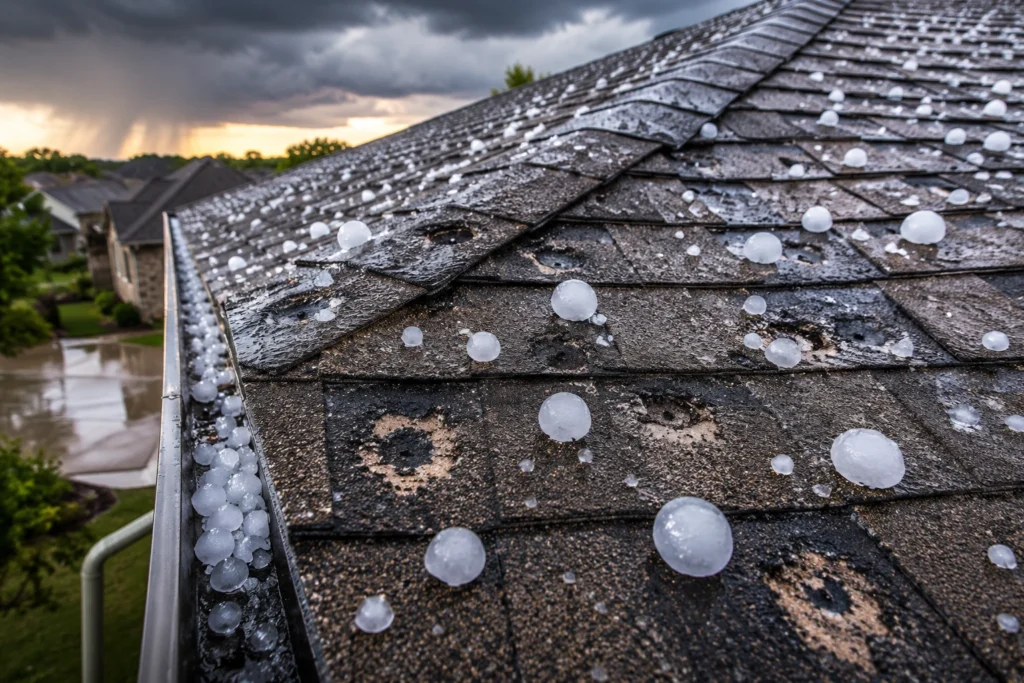
A severe hailstorm can last only a few minutes. The financial consequences, however, can follow homeowners for years. That is why understanding a roof hail damage insurance claim Texas homeowners may need to file is so important. Many property owners make the same mistake. They walk outside after a storm, glance at the roof from the driveway, see nothing obvious, and assume everything is fine.
Unfortunately, hail damage often hides in plain sight. A roof can suffer significant impact damage while appearing perfectly normal from the ground. Months later, leaks develop. Shingles deteriorate prematurely. Interior water damage appears. By then, proving the connection to the storm may become much more difficult. Whether you own an asphalt shingle roof, metal roofing system, or tile roof, understanding how hail damage occurs and how insurance claims work can help protect both your home and your finances. For homeowners in Waco and throughout Texas, this guide provides a detailed roadmap for navigating the entire process from identifying damage to documenting losses and preparing a strong insurance claim.
Understanding How Hail Damages Roofing Systems
Not all hailstorms create the same level of destruction.
Several factors determine how much damage a roof experiences:
- Hail size
- Wind speed
- Storm duration
- Roof age
- Roofing material
- Previous weather exposure
A one-inch hailstone may cause minimal damage on one roof and significant damage on another. That variability is one reason insurance inspections can become complicated.
What Happens When Hail Strikes a Roof?
When hail impacts roofing materials, it transfers energy into the surface. Sometimes the damage is immediately visible. Other times the impact weakens the material without creating obvious surface damage. Think of it like a bruise. The exterior may look relatively normal while the underlying structure has been compromised. Over time, that weakened area can fail.
The result may include:
- Water infiltration
- Accelerated aging
- Cracked materials
- Reduced weather resistance
- Premature roof replacement
Weather-related roof damage often appears straightforward, but the science behind material performance can be surprisingly complex. Engineers frequently study Tribology, the science of friction, wear, and surface interactions, to better understand how repeated environmental exposure affects construction materials over time. While tribology is not directly related to hail insurance claims, it highlights how seemingly minor surface impacts can contribute to gradual material degradation when combined with years of weather exposure.
Why Some Roofs Are More Vulnerable
Several conditions increase hail susceptibility.
| Factor | Impact on Damage Risk |
|---|---|
| Older roof | Greater likelihood of cracking |
| Previous storm exposure | Existing weak points worsen |
| Poor installation | Reduced impact resistance |
| Inferior materials | Faster deterioration |
| Lack of maintenance | Existing issues become severe |
Even small deficiencies can become major problems when hail enters the equation.
How to Identify Hail Damage by Roof Type
One of the biggest mistakes homeowners make is assuming all roofs show hail damage the same way. They do not. Different roofing materials respond differently to impact. Recognizing those differences is essential when pursuing a hail damage on roof insurance claim.
Asphalt Shingle Roof Hail Damage
Asphalt shingles are among the most common residential roofing materials in Texas. They are also one of the most frequently damaged during hail events.
Signs of Hail Damage on Asphalt Shingles
Professional inspectors typically look for:
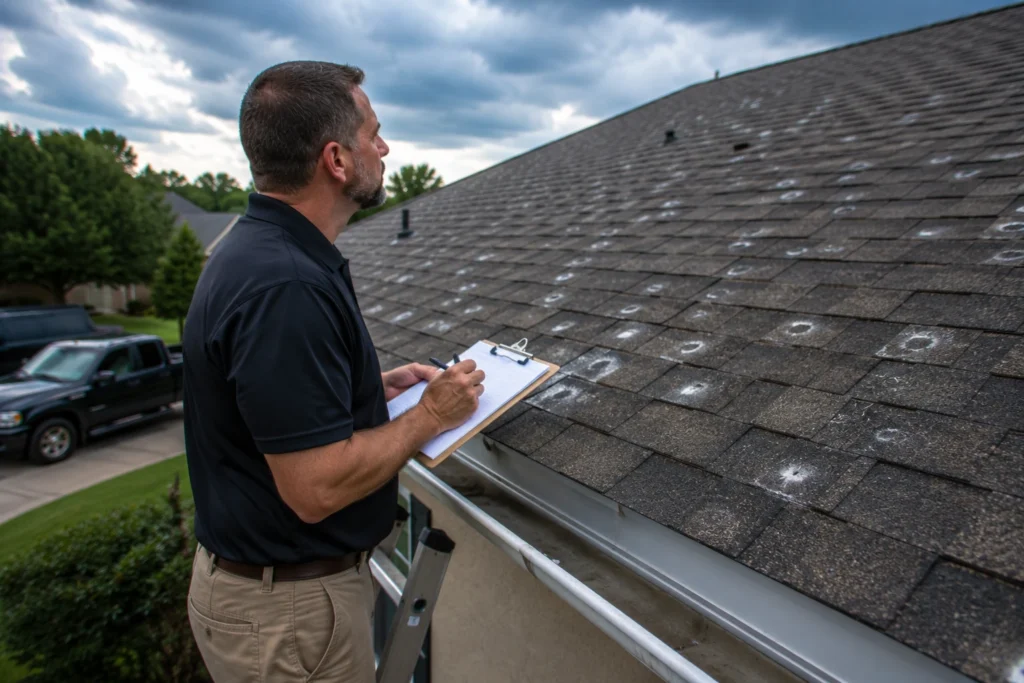
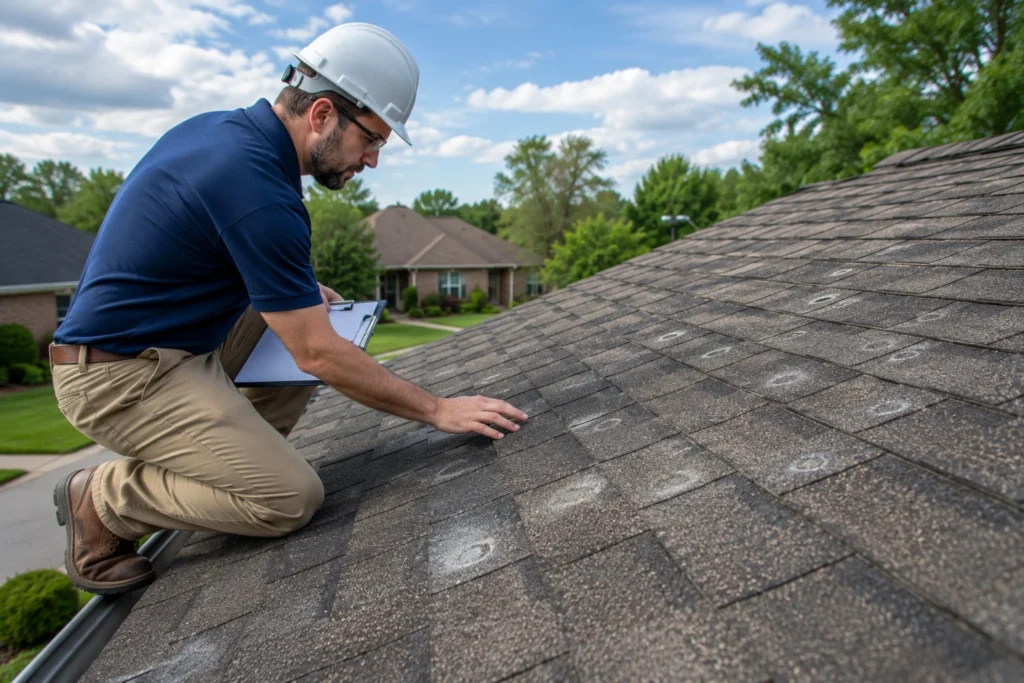
- Circular impact marks
- Granule loss
- Soft bruised areas
- Exposed asphalt layers
- Fractured shingle surfaces
Granule loss deserves special attention. The granules protect shingles from ultraviolet exposure. Once removed, deterioration accelerates significantly. A roof may continue functioning temporarily, but its lifespan can be dramatically reduced.
What Bruising Looks Like
Bruising often appears as dark impact spots. When touched carefully, the area may feel softer than surrounding shingles. These bruises indicate structural damage beneath the visible surface. Insurance companies often evaluate whether bruising has affected the roof’s ability to perform its intended function.
Secondary Damage Areas
The shingles themselves are not the only concern.
Inspectors should also evaluate:
- Ridge caps
- Vent penetrations
- Flashing
- Pipe boots
- Valleys
- Gutters
Damage to these components frequently contributes to future leaks.
Metal Roof Hail Damage
Metal roofs are durable. Extremely durable. But durable does not mean immune. Many homeowners incorrectly believe metal roofs cannot qualify for a hail roof damage insurance claim. That is not true.
Common Indicators of Metal Roof Damage
Inspectors often identify:
- Dents
- Impact depressions
- Surface coating damage
- Scratches
- Distorted seams
In some situations, dents may be primarily cosmetic. In others, the damage affects water-shedding performance and structural integrity. The distinction matters because insurance coverage often depends on whether damage affects function.
When Cosmetic Damage Becomes Functional Damage
A dented panel may seem harmless.
However, impacts can create:
- Water pooling
- Coating failure
- Corrosion points
- Fastener damage
- Seam separation
These issues may justify more extensive repairs or replacement.
Tile Roof Hail Damage
Tile roofs require particularly careful evaluation. Damage is often less obvious than homeowners expect.
Concrete Tile Damage
Watch for:
- Surface fractures
- Broken edges
- Corner damage
- Impact cracks
Clay Tile Damage
Clay tile may exhibit:
- Chipping
- Cracking
- Penetration points
- Hidden breakage
The visible tile is not always the biggest issue. Often, the underlayment beneath the tile sustains significant damage even when surface impacts appear minor.
Why Tile Claims Are More Complex
Tile systems involve multiple components working together. A seemingly small crack can compromise waterproofing performance. Additionally, matching replacement tiles may be difficult or impossible if the roof is older. These factors frequently influence claim valuations.
Roof Components Frequently Damaged Alongside Roofing Materials
Many insurance inspections focus heavily on the primary roofing material. Unfortunately, important supporting components sometimes receive less attention. This can create claim deficiencies.
Flashing
Flashing protects roof transitions.
Common locations include:
- Chimneys
- Walls
- Valleys
- Skylights
Even minor flashing damage can allow water intrusion.
Roof Vents
Ventilation systems often sustain direct hail impacts.
Inspect for:
- Cracks
- Dents
- Broken covers
- Loose components
Gutters and Downspouts
Gutters provide valuable evidence of storm severity.
Large hail frequently leaves:
- Dent patterns
- Impact marks
- Paint damage
These indicators often help support a roof hail damage insurance claim Texas homeowners submit after severe storms.
Skylights
Skylights are especially vulnerable.
Potential issues include:
- Cracked glazing
- Seal failures
- Frame damage
These damages frequently contribute to water infiltration.
Immediate Steps to Take After a Hailstorm
The hours immediately following a storm can significantly influence claim outcomes. Panic rarely helps. Organization does. Let’s focus on practical actions.
Prioritize Safety First
Safety always comes before documentation. Always.
Stay Off the Roof
One of the most common mistakes homeowners make is climbing onto a potentially damaged roof. This creates unnecessary risk. Wet surfaces, hidden damage, and unstable materials can quickly lead to injury. Ground-level observations are safer. Professional inspections can occur later.
Watch for Electrical Hazards
Storms often create electrical dangers.
Look for:
- Downed lines
- Damaged service connections
- Water near electrical systems
If concerns exist, contact professionals immediately.
Conduct an Initial Property Assessment
You do not need to be a roofing expert to gather useful information. You simply need to document what you observe.
Photograph Everything
Take photos of:
- Roof surfaces visible from the ground
- Gutters
- Siding
- Windows
- Vehicles
- Outdoor equipment
More documentation is usually better than less.
Check the Interior
Roof damage often reveals itself inside the home.
Inspect:
- Ceilings
- Attics
- Walls
- Light fixtures
Watch for:
- Water stains
- Damp insulation
- Dripping water
- Discoloration
Create a Damage Log
Write down:
- Storm date
- Approximate time
- Observed damage
- Weather conditions
Small details can become important later.
Prevent Additional Damage
Insurance policies generally require homeowners to take reasonable steps to prevent further losses. This does not mean permanent repairs. It means temporary protection.
Examples include:
- Emergency tarping
- Water extraction
- Temporary sealing
- Debris removal
Keep all receipts. Save every invoice. Document every mitigation effort. These expenses may be reimbursable.
Notify Your Insurance Company Promptly
Timing matters. Waiting several months before reporting damage creates challenges.
Insurance carriers often examine:
- Reporting delays
- Maintenance history
- Intervening weather events
Prompt notification helps establish a clearer timeline.
Understanding Policy Deadlines
Every policy differs. Some carriers impose specific reporting requirements. Review your policy carefully. If questions arise, seek professional guidance early rather than late.
How to Document Damage for Your Claim
Strong claims are built on evidence. Not assumptions. Not emotions. Evidence. This is where many successful claims separate themselves from unsuccessful ones. Many homeowners search online for guidance on “How to Document Hail Damage for an Insurance Claim” after a storm, but the most effective approach is surprisingly simple: create a detailed timeline, take extensive photographs from multiple angles, save all inspection reports, and maintain copies of every communication with your insurance company. Thorough documentation often becomes one of the strongest assets during the claims process.
Create a Storm Timeline
Your timeline should include:
- Date of hail event
- Weather reports
- Inspection dates
- Repair estimates
- Insurance communications
A well-organized timeline creates credibility. It also helps prevent confusion during claim reviews.
Gather Weather Documentation
Supporting materials may include:
- National Weather Service reports
- Local weather data
- Hail maps
- News coverage
Weather evidence helps establish storm conditions affecting the property.
Capture Comprehensive Photographs
Avoid taking only a few quick photos. Instead, document thoroughly.
Best practices include:
- Wide-angle views
- Close-up impacts
- Multiple elevations
- Time-stamped images
- Interior damage photos
Professional-quality documentation often strengthens a hail damage on roof insurance claim significantly.
Obtain Professional Roof Inspections
Independent inspections provide valuable insight. A professional evaluation may identify damage that homeowners cannot safely or accurately detect.
Typical reports may include:
- Roof measurements
- Damage locations
- Photographic evidence
- Repair recommendations
- Replacement considerations
These reports often become important during claim negotiations.
Keep Everything Organized
Create a dedicated claim file.
Store:
- Inspection reports
- Photos
- Emails
- Letters
- Estimates
- Receipts
- Notes from phone conversations
Organization reduces stress.
It also improves claim efficiency.
Understanding the Insurance Inspection Process
Once a claim is filed, the insurance company begins its investigation. Many homeowners assume the inspection automatically captures every item of damage. In reality, inspections vary. Adjusters have limited time, weather conditions may affect visibility, and some damage simply isn’t obvious during an initial visit. Understanding the process helps homeowners participate more effectively.
What Happens After Filing a Claim?
Most claims follow a similar sequence:
- Claim assignment
- Adjuster contact
- Property inspection
- Scope preparation
- Coverage review
- Settlement determination
Each stage influences the final outcome.
What Adjusters Evaluate
During a roof inspection, adjusters generally look for:
- Evidence of hail impacts
- Functional damage
- Age-related wear
- Previous repairs
- Signs of maintenance issues
- Interior water intrusion
They must also determine whether the observed damage is consistent with the reported storm event.
Repair vs. Replacement Analysis
One of the most important decisions involves whether the roof can be repaired or requires replacement.
Factors considered may include:
| Consideration | Potential Impact |
|---|---|
| Extent of damage | Repair vs. replacement |
| Roof age | Availability of matching materials |
| Building code requirements | Additional scope items |
| Roof design complexity | Labor and material costs |
| Safety concerns | Replacement necessity |
This evaluation plays a major role in any roof hail damage insurance claim Texas homeowners pursue.
What Insurance Carriers Commonly Miss in Their Scope
Most claim disputes are not about whether hail occurred. They are about scope. In other words, what exactly needs to be repaired or replaced. This is where many homeowners leave money on the table without realizing it.
Incomplete Roof Measurements
A small measurement error can create large differences in material quantities.
Underestimated measurements may affect:
- Shingle quantities
- Underlayment
- Flashing
- Labor
- Waste factors
Accurate measurements matter.
Overlooked Roofing Components
Some of the most commonly missed items include:
Starter Shingles
Starter strips are critical to wind resistance and roof performance. Yet they are frequently omitted from initial estimates.
Ridge Caps
Ridge caps often sustain direct hail impacts. Replacement may be necessary even when other roof sections appear less damaged.
Flashing Systems
Damaged flashing can create future leak points. Ignoring flashing may result in incomplete repairs.
Ventilation Components
Roof ventilation systems often require replacement during roof restoration projects. These items are commonly overlooked.
Missing Code Upgrade Requirements
Modern building codes frequently require upgrades when roofs are repaired or replaced.
Examples include:
- Ice and water barriers
- Ventilation improvements
- Fastener requirements
- Underlayment standards
Many policies include Ordinance and Law coverage that may help address these additional costs.
Underestimated Labor Costs
Labor shortages and rising construction costs continue affecting roofing projects throughout Texas.
Commonly overlooked expenses include:
- Material removal
- Disposal fees
- Steep roof charges
- Access limitations
- Equipment costs
Interior Damage Often Receives Less Attention
Roof claims should not focus exclusively on the roof.
Water intrusion can affect:
- Drywall
- Insulation
- Flooring
- Paint
- Trim
- Cabinets
Even minor leaks can create significant interior restoration expenses.
Hail Damage Claim Supplements and Hidden Scope Items
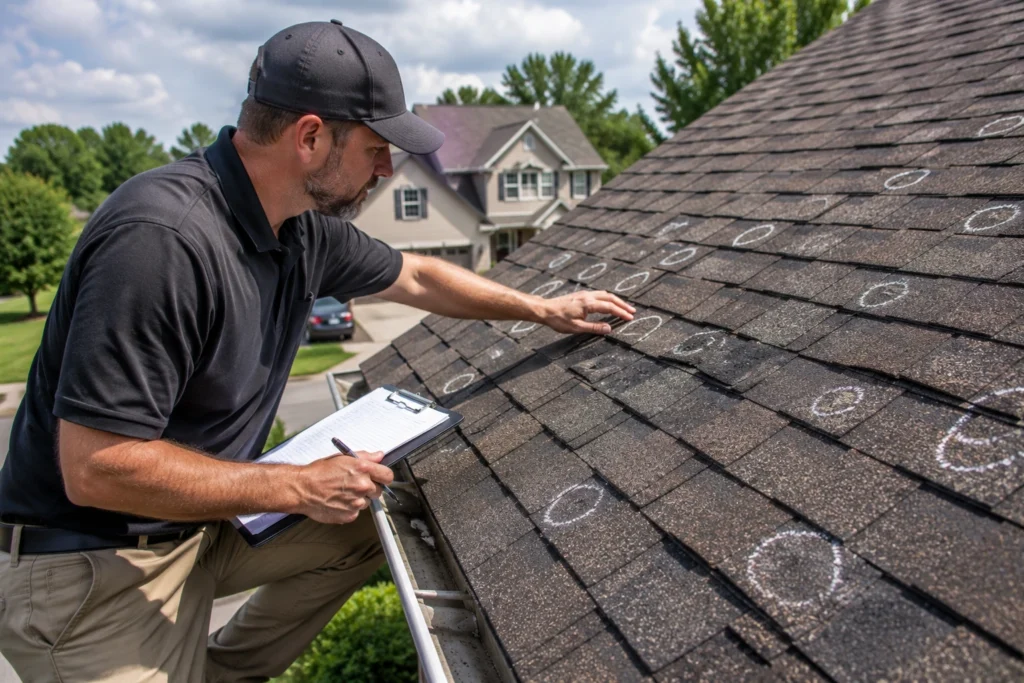
One of the most important concepts homeowners should understand is the supplement process. Many people incorrectly assume the first estimate is final. It rarely is. Understanding “Hail Damage Claim Supplements: What Carriers Miss in Their Scope” can significantly improve claim accuracy because important items such as flashing, ridge caps, ventilation components, code-required upgrades, or hidden structural damage are sometimes identified only after repairs begin or additional inspections are performed.
What Is a Supplement?
A supplement is a request to adjust the claim based on additional information discovered after the initial estimate. Supplements are extremely common in roofing claims. In fact, many legitimate claim adjustments occur through this process.
Why Supplements Become Necessary
Additional damage is often discovered during:
- Material removal
- Structural inspection
- Code review
- Contractor evaluation
Hidden issues cannot always be identified during the first inspection.
Examples of Common Supplements
A roofing contractor may discover:
- Damaged decking
- Additional flashing replacement needs
- Ventilation upgrades
- Underlayment damage
- Structural concerns
Each item may require documentation and review.
The Supplement Submission Process
Typical supplement packages include:
- Detailed estimates
- Photographs
- Contractor reports
- Code documentation
- Material specifications
The insurance company then evaluates the supporting evidence and determines whether additional payment is warranted.
Why Proper Supplements Improve Claim Accuracy
Supplements are not about inflating claims. They are about ensuring all covered damage is properly accounted for. A well-supported supplement often produces a more accurate claim outcome. This is particularly important for a hail roof damage insurance claim involving older or complex roofing systems.
Roof Hail Damage Insurance Claim Texas: Common Claim Challenges
Even straightforward claims can encounter obstacles. Understanding those challenges helps homeowners respond effectively.
Claim Delays
Delays may occur because of:
- High claim volume after storms
- Scheduling conflicts
- Documentation issues
- Additional inspections
The key is maintaining organized records and consistent communication.
Partial Denials
Sometimes portions of a claim are approved while other portions are denied.
Common reasons include:
- Coverage disputes
- Causation disputes
- Wear-and-tear determinations
- Insufficient documentation
A denial does not necessarily mean the discussion is over.
Low Settlement Offers
Settlement disagreements frequently stem from differing opinions regarding:
- Damage extent
- Material pricing
- Labor costs
- Code requirements
- Scope completeness
Independent evaluations often help clarify these disputes.
What to Do If Your Hail Claim Was Denied in Texas
A denial can feel frustrating. However, it is important to approach the situation methodically. If you’re wondering “What to Do If Your Hail Claim Was Denied in Waco, TX“, start by carefully reviewing the denial letter, gathering additional evidence, and requesting clarification regarding the specific policy provisions cited by the carrier. In many situations, supplemental documentation or an independent inspection can help support a reconsideration of the claim.
Review the Denial Letter Carefully
Start by identifying:
- The stated reason for denial
- Policy provisions referenced
- Supporting evidence cited
Understanding the carrier’s position is essential.
Gather Additional Evidence
Potential evidence may include:
- Independent inspections
- Contractor reports
- Engineering assessments
- Additional photographs
- Weather documentation
Request a Reinspection
New evidence may justify a second review. Many claims are reassessed after additional documentation is provided.
Seek Professional Assistance
Complex disputes often benefit from professional representation. Experienced claim professionals understand how to evaluate policy language, scope issues, and supporting documentation.
Why Hiring a Public Adjuster Changes Claim Outcomes
Many homeowners only learn about public adjusters after encountering claim difficulties. By then, valuable time may have passed.
What Does a Public Adjuster Do?
A public adjuster works exclusively for the policyholder.
Their responsibilities often include:
- Policy review
- Damage evaluation
- Documentation
- Claim preparation
- Negotiation
- Supplement support
Unlike insurance company adjusters, they represent the homeowner’s interests. When evaluating representation options, many homeowners research “Public Adjuster vs. Insurance Adjuster for Hail Claims in Waco, TX” to better understand the differences between the two roles. While both may inspect the same property, a public adjuster works exclusively on behalf of the policyholder, whereas the insurance company’s adjuster represents the interests of the carrier during the claim evaluation process.
Public Adjuster vs. Insurance Adjuster for Hail Claims in Texas
| Public Adjuster | Insurance Company Adjuster |
|---|---|
| Represents homeowner | Represents insurance company |
| Independent assessment | Carrier-directed review |
| Focuses on policyholder recovery | Focuses on carrier obligations |
| Assists with documentation | Evaluates submitted documentation |
| Negotiates on behalf of homeowner | Determines carrier position |
Both professionals serve important roles. The difference lies in who they represent.
Benefits of Hiring a Public Adjuster
Comprehensive Damage Evaluation
Public adjusters often conduct detailed inspections designed to identify all covered damage.
Stronger Documentation
Documentation drives claim outcomes. Experienced public adjusters understand what evidence supports successful claims.
Better Supplement Support Supplements require organization and supporting documentation. This is an area where professional assistance can provide substantial value.
Reduced Stress
Claims can become time-consuming. Many homeowners appreciate having an advocate manage communications and negotiations.
When Homeowners Should Consider Professional Representation
Professional assistance may be particularly beneficial when:
- Damage is extensive
- Claims are denied
- Settlements appear insufficient
- Multiple structures are involved
- Complex roofing systems exist
For many homeowners in Waco, professional representation provides confidence during an unfamiliar process.
Real-World Example: From Inspection to Settlement
Consider a common scenario.
A homeowner experiences a severe hailstorm. Initially, the roof appears intact. Several months later, water stains begin appearing near a bedroom ceiling.
Initial Inspection
A professional inspection reveals:
- Widespread shingle bruising
- Granule loss
- Damaged flashing
- Multiple impact points
Much of the damage was not visible from the ground.
Claim Filing
The homeowner files a hail damage on roof insurance claim and provides:
- Storm date information
- Inspection findings
- Photographs
- Repair recommendations
The insurer schedules an inspection.
Review and Evaluation
During the investigation process, additional damage is identified. Updated documentation supports a broader repair scope. The claim is adjusted accordingly.
Final Restoration
The roof is replaced. Associated flashing and ventilation components are upgraded. The homeowner restores the property and avoids ongoing leak-related damage. The lesson is simple. Early action and thorough documentation matter.
Key Takeaways for Homeowners
If you remember only a few points from this guide, make them these:
- Inspect your property promptly after hailstorms.
- Document everything thoroughly.
- Keep all records organized.
- Understand that initial estimates may not be complete.
- Learn how supplements work.
- Seek professional guidance when necessary.
- Never assume damage is absent simply because it is not visible from the ground.
These practices can dramatically improve claim outcomes.
Conclusion
A hailstorm may last only minutes, but the decisions made afterward can affect your property for years. The most successful homeowners approach the process proactively. They document damage carefully. They understand how a roof hail damage insurance claim Texas process works. They recognize that roofing systems involve far more than shingles alone. Most importantly, they ensure all covered damage is properly evaluated before repairs begin.
Whether you’re dealing with a newly discovered issue or preparing for future storms, understanding the relationship between roofing damage, insurance coverage, supplements, and professional representation puts you in a stronger position. For property owners in Waco and throughout Texas, knowledge remains one of the most valuable tools available when navigating a roof hail damage insurance claim Texas. When combined with detailed documentation and expert guidance, that knowledge can help protect both your roof and your financial recovery after the next major storm.
FAQs
The deadline varies by policy, but it’s best to report hail damage as soon as possible after the storm.
Yes. Many forms of hail damage, including bruising and granule loss, are only visible during a close inspection.
If the damage is extensive and repairs cannot restore the roof properly, a full replacement may be covered under the policy.
Photos, inspection reports, weather records, repair estimates, and detailed documentation can strengthen your claim.
A professional inspection can help identify hidden damage and provide documentation that supports the claim process.
A supplement is a request for additional claim funds when previously undiscovered damage or required repairs are identified.
Yes. Metal roofs can sustain both cosmetic and functional damage that may qualify for insurance coverage.
Review the denial letter, gather additional evidence, and consider requesting a reinspection or professional assistance.
No. Some hail damage weakens roofing materials and may not lead to leaks until months later.
Consider hiring a public adjuster when damage is significant, the claim is disputed, or the settlement appears incomplete.